Working with speculative fiction for new thinking about food
With a changing climate, demands to reduce reliance on oil and increasing geopolitical instability, the question of how to ensure a stable and resilient food supply is increasingly urgent. At present, food systems are reliant on imported materials – from the fertiliser used in agriculture to everyday ingredients and vegetables. We are also seeing new risks in the form of ecological collapse.
Understanding what it might take to achieve food resilience without destroying the ecosystms we are part of requires us to challenge our assumptions and explore potentially radical ideas. Creating space to step back from business as usual and consider these alternatives, however, can be tricky when everyone is facing day to day challenges.
On this basis, we decided to create a workshop that would address the following aims:
- Build productive dialogue across different sectors and interests in relation to food futures
- Explore radically transformative possibilities for creating food security in Uppsala city region.
- Identify a set of critical challenges and questions where future collaboration would be useful
To achieve these aims, we created the workshop ‘Uppsala in Space’.
This was an opportunity for diverse actors in the food system to approach a city’s relationship with food and land with fresh eyes. We invited participants think together about how things might be otherwise, in the safe space of an imagined other reality.
The speculative fiction we proposed was an intentionally radical one – it imagined both a pandemic and radical transformations in space/engineering technologies – where the decision had been taken to list Uppsala and some of its surrounding land and forest, into space, carrying with it its existing people, climate, ecosystem – but divorcing it from wider networks and flows of food, people and resources.
In this environment, we asked: What would it take to create a resilient food system if the city were detached from its wider national and international networks, what resources does the city already have, what approaches to land use would be required, what sorts of food could be grown, what inputs would be required in terms of labour and materials, how and who would need to collaborate differently?
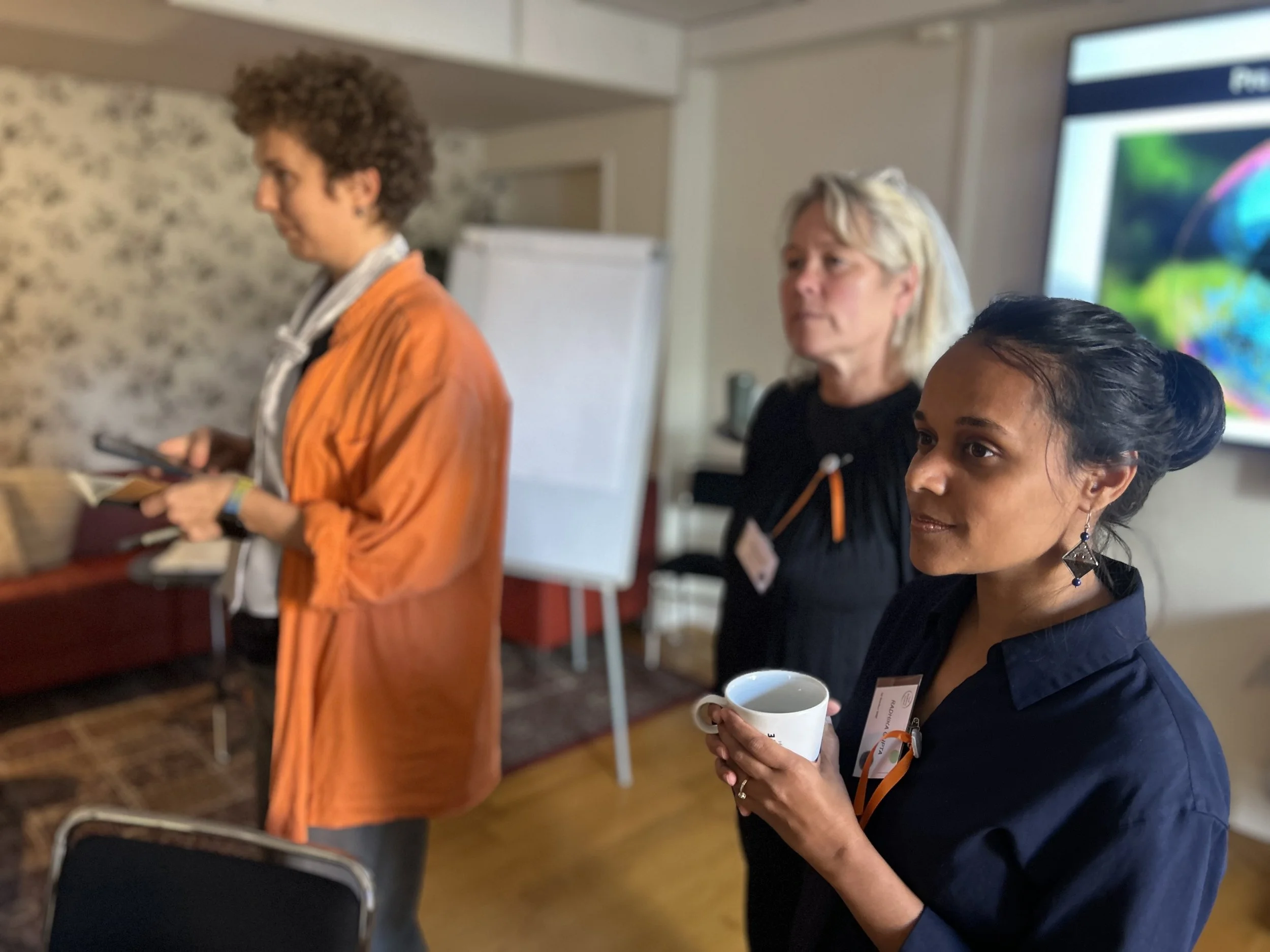
The workshop brought together 14 people to explore this scenario – including ecologists, nature connection specialists, disaster/resilience specialists, politicians, voluntary and community groups, academics working in environmental communication, local farmers and educators. Led by Laurene Cheilan and Keri Facer, with support from Åsa Berggren and Jasmine Zhang, the workshop took conversations in unexpected and interesting directions, led to the identification of important needs – in particular, the economic, cultural and political infrastructures required for food resilience – and to a manifesto for collective action and commitment in the city.
This workshop was a pilot which we have now developed into a more elaborated schedule for facilitators which is available for others to use by contacting Keri Facer (Keri.Facer@bristol.ac.uk)
This will shortly also be available in the resources section of this website and on Keri’s site ‘temporalimagination.org’.
Below we include some of the outcomes from the workshop as prompts for others to think with.
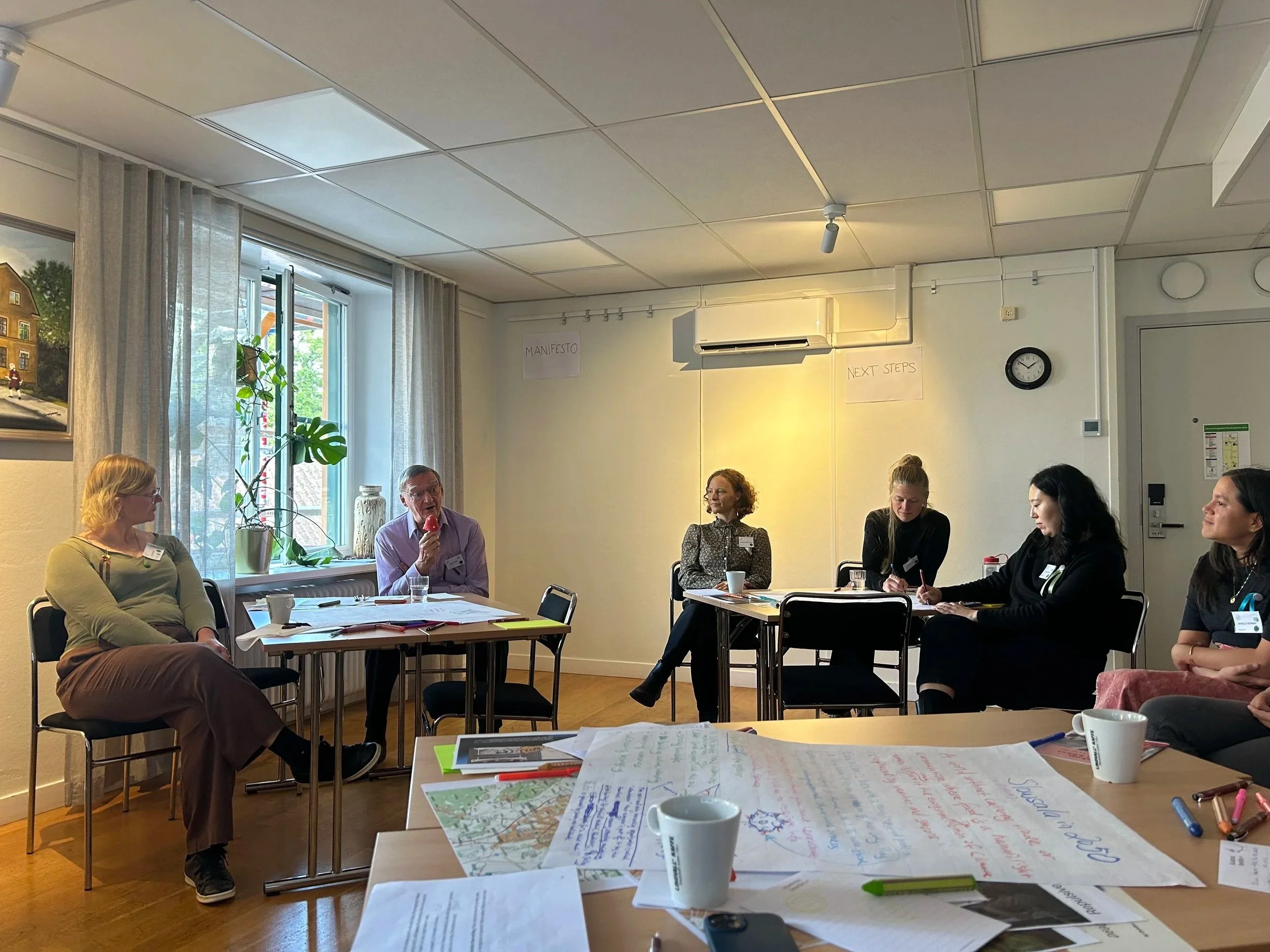
Manifesto for Uppsala Food Transformation
We recognise that change can’t be made alone and that it takes a village
We recognise the huge network of people who care about changing things
We recognise that big cultural change is the accumulation of our everyday actions – not just our words
We recognise the value of society and the value of collaboration and sharing
We recognise the problem of entrenched belief and identity, and work with those who are willing to change
We acknowledge that people need to feel valued and respected so that they can make a difference
We recognise that new and potentially useful and clever ideas for change can be produced very quickly
From this day forward, we will do more of the things we want to see in the world
Specifically, we commit to putting pressure on politicians to increase prices on fossil fuels to make alternatives competitive
We commit to connecting with others
We commit to working with facilitators
We commit to working with students to imagine alternative and radical futures
We commit to building a network of communities of change on the land and in the city
From this day forward, we recognise that we are never alone, but always connected
We commit to changing our paradigm and practice of connecting to others – human and non-human
We commit to breaking rules and setting them ourselves
We will let go control, and let the process lead itself
A sketch of some of the resources identified in this city:
Water/ river
Students
Forest
Farmland
Gardeners
Gardens
Farmers
Private Allotments
University researchers
Schools – grounds and kitchens
Teachers
Botanic Gardens – seeds, plants
Diverse communities with diverse food traditions – growing & eating
Old fruit trees
Elders with old food traditions
Clay Soil
Medical Staff and health advisors
Parking Lots
Bird watchers
Animal Farms
Military – logistics and materials experts
Hospitals
Food shops – distribution and storage expertise
City Farm
Voluntary organisations and community groups
Sports Halls and Grounds
Butchers, bakers
Food Shops
Chefs and food experts
Waste Treatment
Historians
Water Treatment
Religious communities
Biogas Plant
Wildlife
Cemeteries
Plantlife
Church Kitchens
Soil life
Rooftops
Butchers, bakers, food processors and preparation facilities